
Mecklenburg Probation and Parole Differences
North Carolina uses several forms of community supervision, and the labels are not interchangeable. Probation is a court-ordered sentence or part of a sentence. It may let a person remain in the community without first serving a prison term. Parole is a conditional release used mainly for offenses governed by older law. Post-release supervision is the statutory community stage that follows many Structured Sentencing felony prison terms. All three may be administered through the North Carolina Department of Adult Correction, but their legal source and dates differ. The North Carolina Post-Release Supervision and Parole Commission governs the applicable parole and post-release stage, while Sheriff Garry L. McFadden's office documents MCSO custody.
A person marked Active Probationer/Parolee in the NCDAC Offender Public Information Search may already be living in the community. “Active” describes supervision, not present incarceration. Read the inmate-status field, the probation/parole/post-release field, sentence history, and actual release date together.
| Supervision type | How it begins | Record to verify |
|---|---|---|
| Probation | A court orders community supervision, sometimes without prison. | Court judgment and NCDAC supervision status |
| Parole | The Commission conditionally releases a parole-eligible person under older law or a limited exception. | NCDAC sentence history, parole dates, and Commission process |
| Post-release supervision | A structured felony prison term reaches the statutory release-to-supervision point. | Actual release date and post-release status in NCDAC |
These terms also differ from discharge. Discharge means the supervision or sentence has ended under the governing order or statute. A jail departure is not the same event.
- Absconder
- A supervised person whom the officer cannot locate and whom DAC says is willfully avoiding supervision.
- Discharge
- The formal end of supervision or the sentence, not merely release from physical custody.
- Post-release supervision
- The community phase that follows qualifying state prison sentences.
- Parole
- Conditional release governed mainly by older parole law and limited statutory exceptions.
Verify Mecklenburg Post-Release Supervision
The state offender number is the strongest public search key. A name-only match can identify the wrong person, especially when names are common. NCDAC records date back to 1972 and cover state prison, probation, parole, and post-release supervision. They do not contain ordinary Mecklenburg County jail-only stays. County physical release is confirmed through the MCSO inquiry or Records and Release, while NCDAC confirms the state supervision that may follow.
- Open the NCDAC offender search and select All if the present status is not known. Select Active Probationer/Parolee only when a current supervision search is intended.
- Enter the offender number when available. Otherwise use a partial name and a limited set of identity fields, then remove filters if the combined criteria return no match.
- Open the correct offender detail. Compare birth information and the conviction or sentence record, not just the name.
- Read inmate status separately from Probation/Parole/Post Release Status. Then compare the Actual Release Date, parole begin and end dates, and supervision periods.
- Use the community-supervision directory to identify Judicial District 26. Contact the office for routing questions that the public record does not answer.
- If the state record and county release entry conflict, confirm the MCSO departure first, then determine whether the person transferred into state custody or began community supervision.
The NCDAC criminal offender searches page also links the general offender record and the separate absconder tool. The MCSO person inquiry remains the correct source for a local jail release that never led to DAC custody or supervision.
The official state search form shows the filters used for this check.
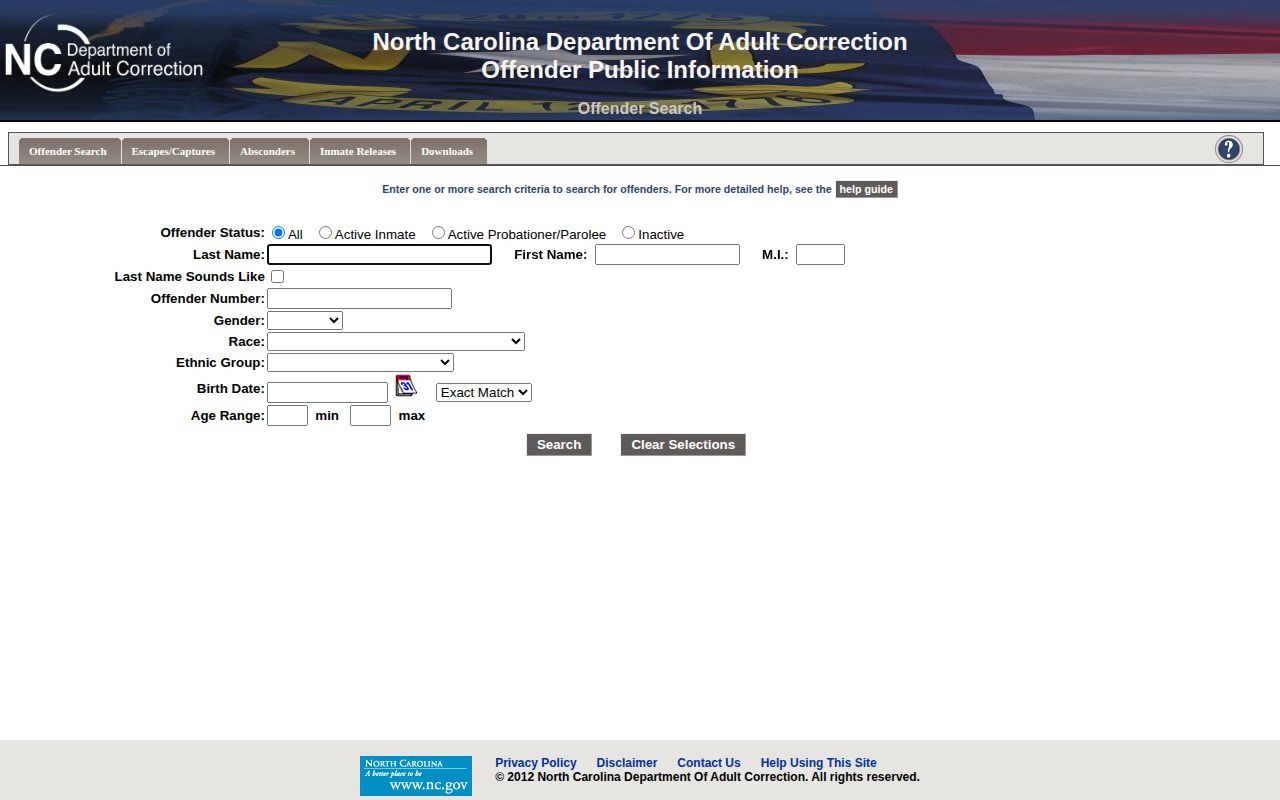
Its status choices help separate an active inmate from a person active only on community supervision.
Note: A populated MCSO Released field proves departure from county custody, while NCDAC shows whether state supervision continues afterward.
Mecklenburg Supervision Office Contact
Mecklenburg County is Judicial District 26 for community supervision. The official directory places the local office in east Charlotte. Staff can route questions about a known supervisee, though laws and agency policy can limit what they disclose. The durable public details are the address and main telephone number; personnel listings can change and should not be treated as permanent.
NCDAC Community Supervision, Judicial District 265701 Executive Center Drive, Suite 325
Charlotte, NC 28212
Phone: 704-563-4117
Fax: 704-563-4124
The official community-supervision directory is the source for the current office listing.
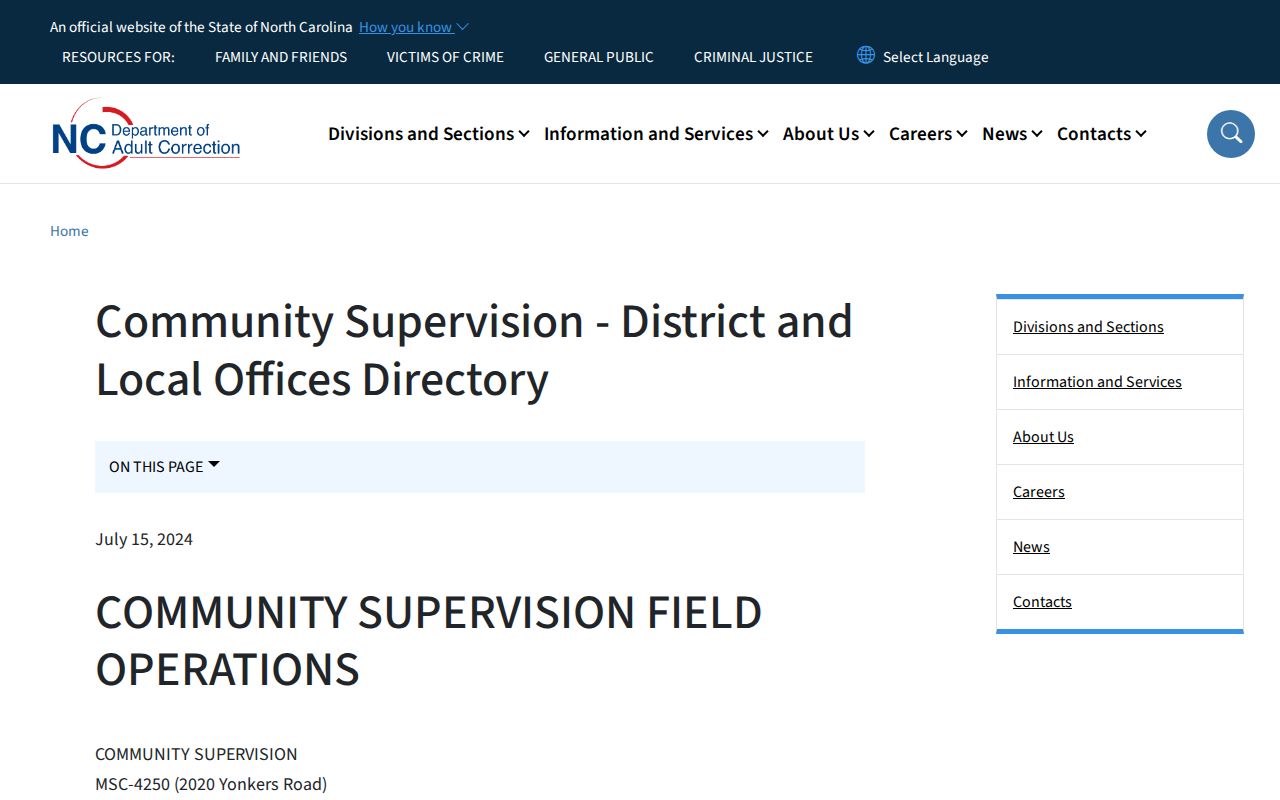
The directory should be rechecked before an in-person visit because office assignments and staff contacts may change.
Mecklenburg Probation Absconder Records
NCDAC provides a separate absconder search by last name and county of supervision. Mecklenburg can be selected as the county. An absconder entry means the agency describes the person as not reporting, unable to be located by the officer, and willfully avoiding supervision. It does not, standing alone, prove that a public arrest warrant is active.
Confirm a warrant through the court or appropriate law-enforcement record. A supervision violation may lead to Commission action, modification, arrest, or return to custody, but the outcome depends on the order and legal process. An old search result should not be treated as current proof.
The official NCDAC absconder search screen shows the limited public criteria used for Mecklenburg County probation absconder records.
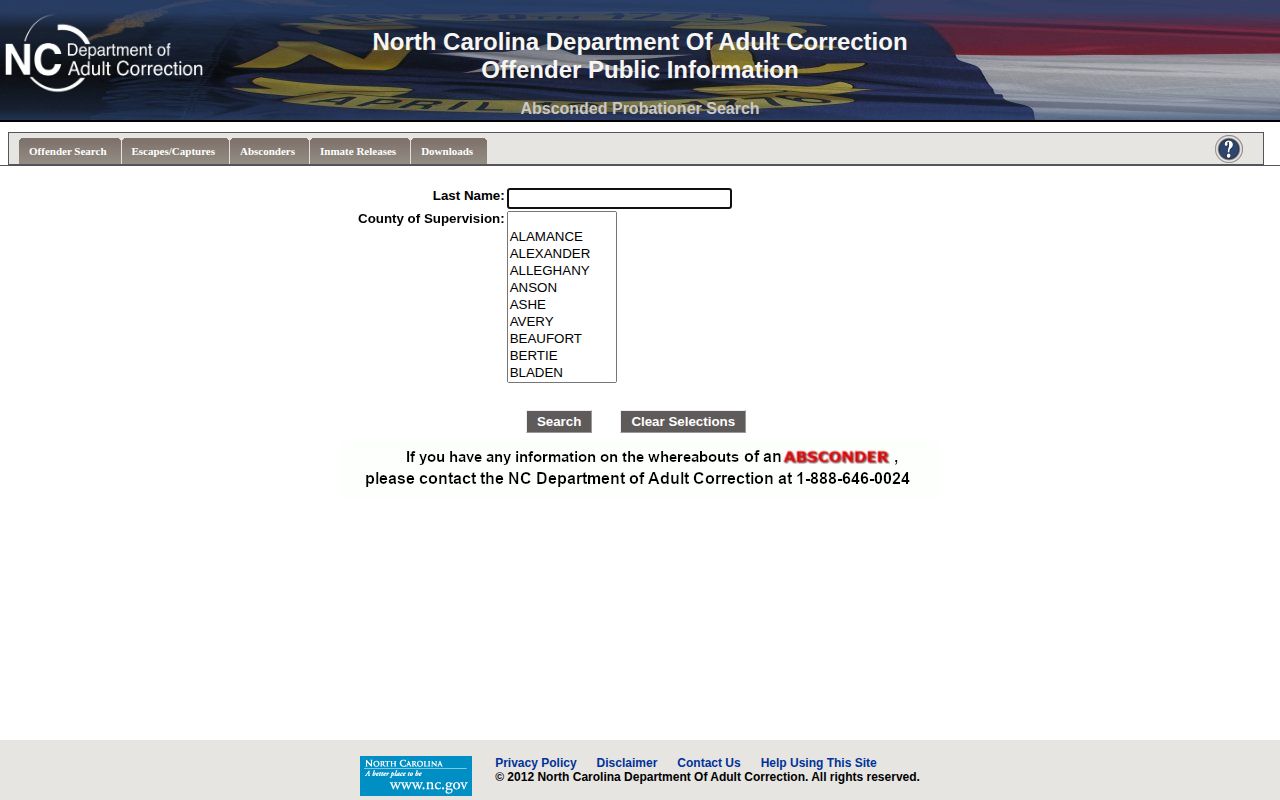
Match the result to the NCDAC offender detail and use a court source for any separate warrant question.
Mecklenburg Parole Reviews, Not Hearings
The North Carolina Post-Release Supervision and Parole Commission states that it holds no formal hearings and does not personally meet offenders. There is no conventional public hearing calendar to search. Commissioners review case files separately, and a majority vote approves or denies parole. Victim Support Services can explain participation options, but a victim meeting is not an offender hearing and the offender is not present.
Ordinary parole generally concerns offenses committed before October 1, 1994. Structured Sentencing eliminated ordinary parole for later offenses, subject to limited statutory exceptions such as misdemeanor DWI. Once an eligible minimum has been reached, review is generally annual. First- or second-degree murder may use a three-year review interval, while a sexually violent offense uses a two-year interval under G.S. 15A-1371.
The Commission may deny parole based on statutory risk and compliance factors, the seriousness of the offense, continued benefit from treatment or training, or risk of more crime. Individual denial reasons are confidential, and no appeal is provided. The public result channel is the monthly Discretionary Parole Reviews library, not a person-name decisions database. Reports began in September 2024 and extended through June 2026 on the research date. Their glossary distinguishes an Incomplete Decision, when more information is needed, from a Suspend Decision, when further consideration stops for the time.
The Commission’s official page documents the absence of formal Mecklenburg County parole hearings.
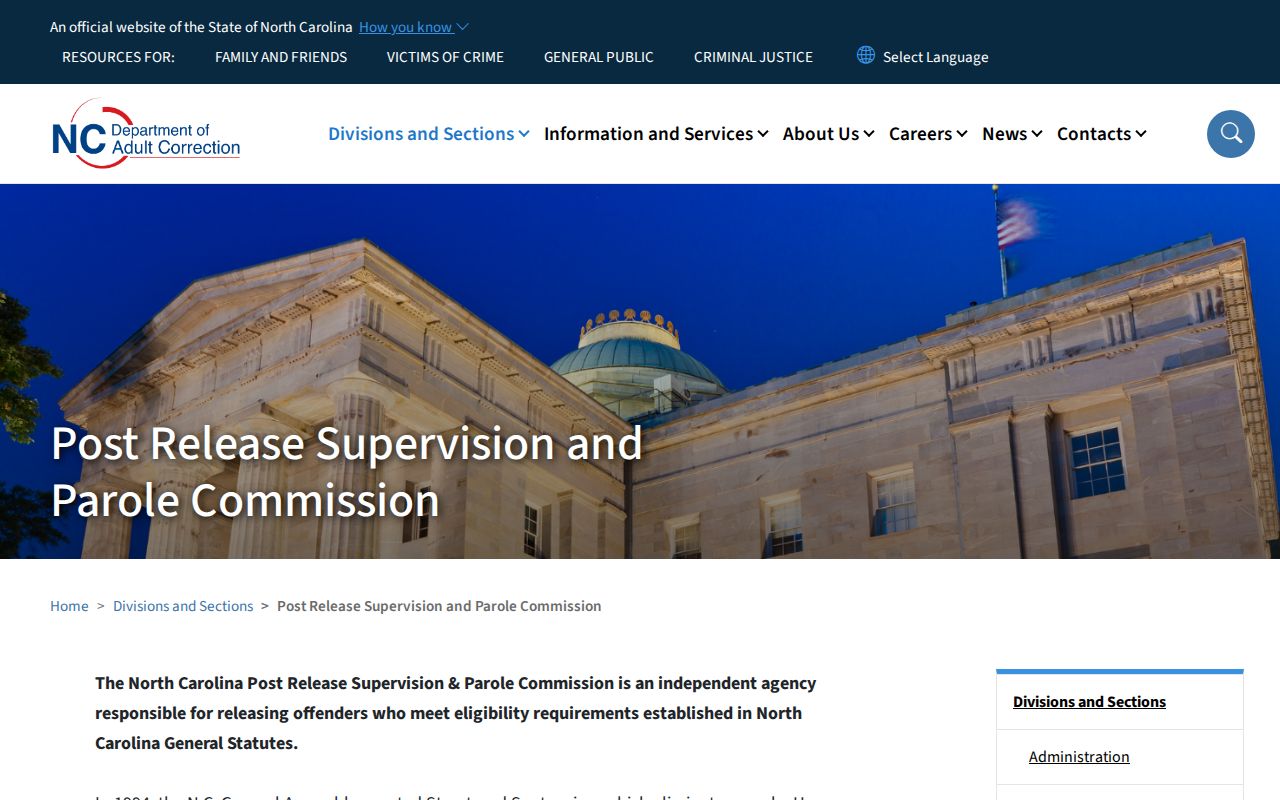
That statewide file-review process is the correct model for a Mecklenburg parole case.
Mecklenburg Supervision Conditions and Discharge
Conditions come from the court, the Commission, and the rules that govern the specific supervision type. They may address reporting, location, approved programs, and other case-specific duties. Public search results summarize status and dates, but they do not expose every officer note or confidential correction record. The supervising office is the better source for a person’s own reporting instructions.
Post-release supervision begins on the release date under G.S. 15A-1368.5. G.S. 15A-1368.2 provides the release-to-supervision framework and says completion of the supervision period terminates the sentence. Probation ends under its court judgment and any lawful modification. Older parole records can show parole begin and end dates. Check the state detail after an expected end date rather than assuming that time alone produced discharge.
When exact proof matters, request the public sentence, admission, release, and supervision fields from NCDAC or obtain the court judgment. Internal correction and supervision files may remain confidential.
Reentry After Mecklenburg County Release
MCSO Re-Entry Support Services meets residents at the release post and provides a basic-needs backpack. The MCSO RESS program is distinct from supervision. It supports the transition out of custody and does not decide parole, probation, or release status.
Mecklenburg County Re-Entry Services accepts voluntary referrals before release and within one year after return from local, state, or federal incarceration. Its purpose-neutral navigation can address identification, treatment or medication, education, health, peer support, and basic needs. Participation does not prove a person’s legal supervision status. Verify that status through NCDAC.
Property After Mecklenburg County Release
Detention Center Central also serves as the county’s financial and property closeout hub. A released resident is escorted to the release area to close the trust-account balance. This is an operational step after release approval, not a promise of a fixed release hour.
An undelivered commissary order may be collected within seven days after a community release. Transfers follow different property and accounting procedures, and late money orders are returned. These details help distinguish community release from a handoff to another custody system. They do not change probation, parole, or post-release conditions.
Note: Central’s account and commissary rules concern release logistics; the Judicial District 26 office controls supervision routing.
Public Record Search
Sponsored Results