
Mecklenburg County 72 Hour Release List Finding
No official MCSO channel in the reviewed source set exposes a named person-level list for the previous 72 hours. The inmate inquiry has no verified rolling-window or date-range control. MCSO's population PDF supplies only one aggregate labeled RELEASED YESTERDAY, and three daily values must not be combined and presented as an official three-day roster.
A three-day check serves a different need from a same-day review. It is intended to catch a release believed to have occurred during a multi-day span and to frame a complete-list request with precise boundaries. Sheriff Garry L. McFadden's office supplies the local inquiry and release record; it does not supply the fictional rolling feed.
Define a Mecklenburg County Three-Day Window
Write the starting date and time, ending date and time, and time zone before searching. “Last 72 hours” moves every minute, while a records request needs stable boundaries. A Friday-through-Monday question may not equal exactly 72 hours, so use the actual dates that matter rather than a vague weekend label.
MCSO processes releases around the clock, but it publishes no fixed release hour. Court action, eligibility checks, warrant checks, property handling, and transfer steps can place the physical departure later than an expected event. Compare the Released timestamp, not merely the day bond was posted or an order was entered.
Search Mecklenburg County 72 Hour Jail Releases
For a known person, the official inquiry can establish whether the jail stay ended inside the defined interval.
- Open the MCSO Inmate Inquiry and turn Actives Only off.
- Search by PID or JID when possible; otherwise enter the name and compare identifying details.
- Open the relevant jail stay, not merely the first similar-name result.
- Read the committed time, current status, prisoner type, and populated Released date and time.
- Compare the actual Released value with the written start and end of the three-day period.
- If transfer is possible, ask for the destination or check the correct receiving system.
- For every departure in the interval, request an existing electronic release log from Records and Release.
A same-day event can be handled through the Mecklenburg County 24-hour release check, which focuses on current processing and immediate verification.
Mecklenburg County Search Without Actives Only
The official MCSO search form shows why a release search differs from a current-roster check.
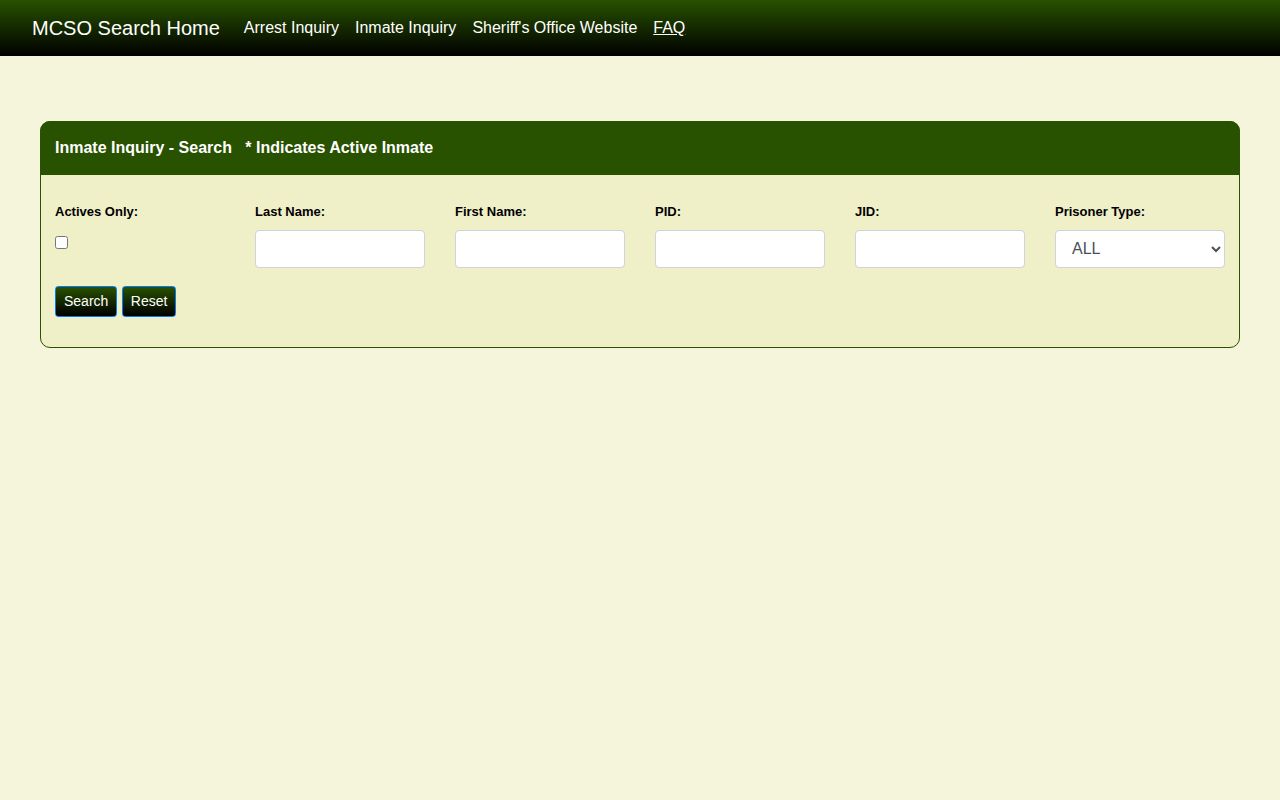
A released person may be absent when Actives Only remains selected. Clearing it exposes eligible historical records but does not add a 72-hour filter, so the detail timestamp still must be checked manually.
Mecklenburg County 72 Hour Release Record Fields
Because there is no official three-day feed, these are the fields to seek in the MCSO detail or an existing OMS release record.
| Field | How it helps in a 72-hour review |
|---|---|
| Name, PID, JID | Match the person and the correct Mecklenburg jail stay. |
| Committed date and time | Identifies when the custody episode began. |
| Released date and time | Tests whether MCSO custody ended inside the chosen interval. |
| Status | Separates a current episode from an inactive record. |
| Prisoner type | Signals county, state, Federal/USMS, BOP, ICE, 287G, or other custody context. |
| Bond or order | Shows an operational release condition, not the final case result. |
| Charges and sentences | Provides episode context without converting allegations into convictions. |
| Release authority and destination | Clarifies community departure versus transfer when requested from the custodian. |
An arrest number, PID, and JID serve different purposes. PID is linked to the person across Mecklenburg bookings, while JID identifies one stay. Use more than a common name when deciding that a three-day result belongs to the right person.
Mecklenburg County Weekend Release Checks
A three-day span is useful when a family member, attorney, or record subject is catching up after a weekend. It reduces the chance that a Saturday or Sunday departure is missed because only one calendar date was searched. It does not alter how the jail records the event, and it does not turn the population PDF into a list of names.
Records and Release operates continuously at the Arrest Processing Center. A public-record response, however, need not be handled outside the custodian's normal records workflow. The operation being open 24/7 does not promise immediate fulfillment of a release-log request. MCSO lists Detention information at 704-336-8100 and Arrest Processing/Records and Release at 980-314-5100.
No official fixed family waiting policy, rideshare rule, jail transportation route, or set release time was found. Those gaps should not be filled with assumptions. Confirm the record first and ask MCSO about current operational directions when needed.
Why Mecklenburg Release History Extends 72 Hours
The MCSO inquiry updates in real time and retains arrest and resident inquiry information for three years from arrest or release. That longer history makes it well suited to a known-person check after a weekend, even though it does not produce a ready-made three-day roster.
The MCSO Inmate Inquiry FAQ documents the three-year scope and immediate updates.
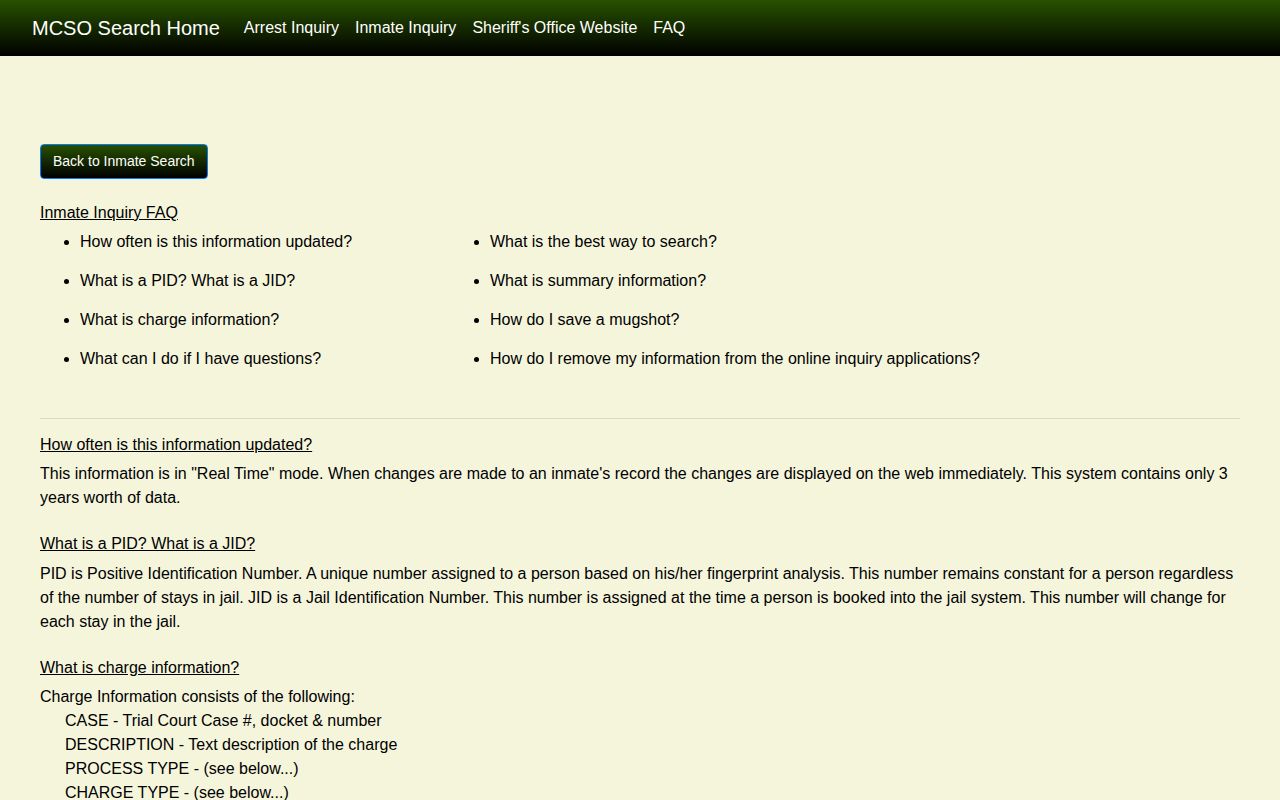
Availability remains subject to expunction, sealing, juvenile confidentiality, spelling and identity errors, and the correct custody system. A missing public hit is not proof that no release took place.
Request Mecklenburg County 72 Hour Release Log
For a complete set of departures, use the Mecklenburg County public-record portal and ask whether MCSO keeps an existing release log or report for the exact date range. Request the existing record electronically. Do not demand that staff create a special 72-hour database compilation.
Identify the start and end down to the date and time. State whether the request seeks all MCSO custody departures or only community releases, if the agency keeps those categories separately. Ask for release timestamp, release type or authority, and destination or receiving agency if those fields exist in the maintained report. Permit lawful redaction of confidential content rather than requesting denial of all separable public fields.
G.S. 132-6 and 132-6.2 govern access, medium, prompt production, and charges. They do not set one statewide number of response days. Ordinary uncertified copies generally are limited to actual reproduction cost, though extensive staff or technology work may support a reasonable special charge. Research found no fixed MCSO fee or guaranteed interval.
Mecklenburg State Releases Are a Different List
The NCDAC Inmate Release Search does offer county, year, and month criteria. It covers releases from North Carolina state prison, not departures from Mecklenburg County Detention Center Central or North. “Release county” is also not necessarily the county of conviction or the physical prison location.
The official NCDAC county and month release search shows the distinct state route.
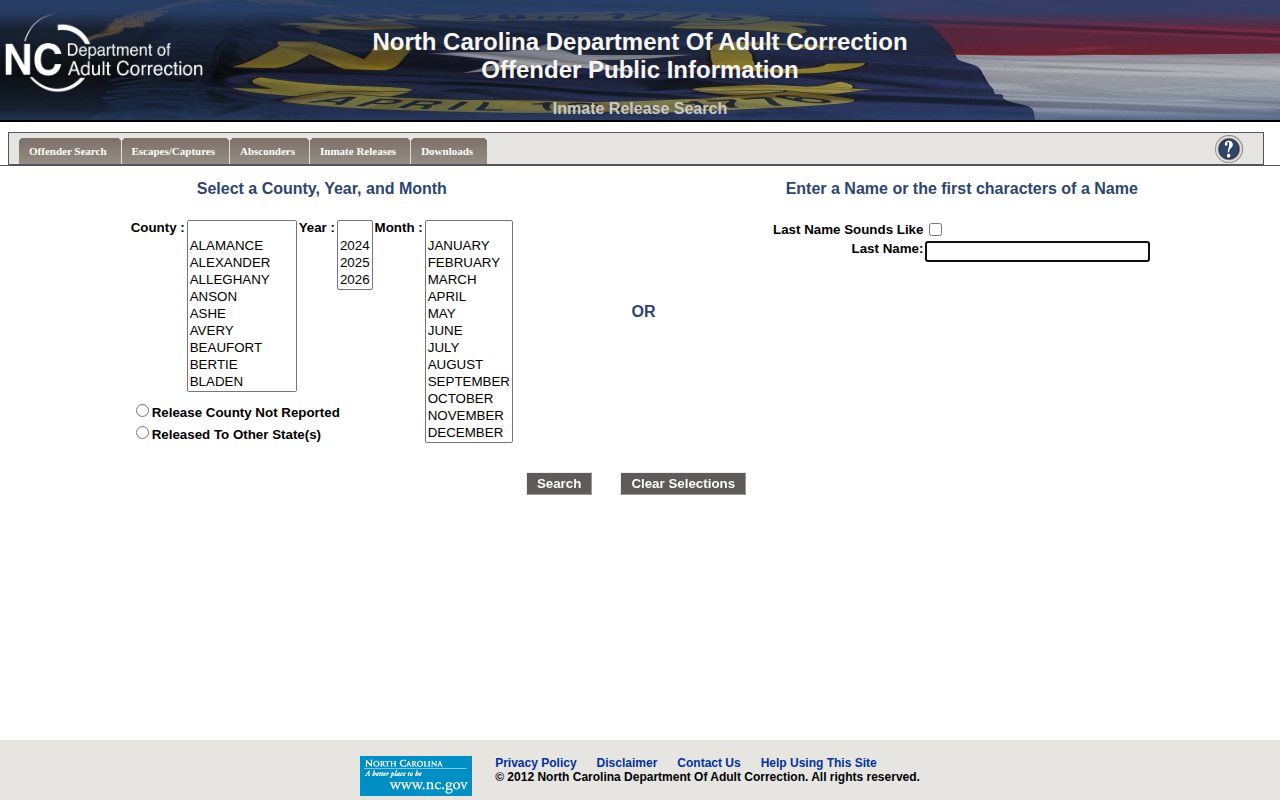
Results can show offender number, name, release date, primary offense, and release type. The live interface range observed July 30, 2026 must not be presented as a permanent retention promise.
Route Mecklenburg County Release Results Correctly
A populated county Released field means MCSO custody ended. If prisoner type or the record indicates State, use the North Carolina Department of Adult Correction and read Actual Release Date plus probation, parole, or post-release status. A person may be out of prison while still active under community supervision. The Mecklenburg County released-inmate lookup provides the full known-person sequence when custody type is uncertain.
For a federal sentence, BOP's national locator gives the lasting federal custody result. A past date with Released or Not in BOP Custody ends BOP custody but does not erase supervision or custody elsewhere. A USMS detainee may have only an MCSO transfer entry before a later BOP record; no comparable public historical USMS release locator was found.
ICE ODLS covers current detainees and people released from ICE custody within the prior 60 days, subject to delay and exclusions. An MCSO handoff to ICE is a transfer, not community release. Search the second system before describing the person's status. If the second search is delayed or missing, preserve the MCSO prisoner type and transfer details, then ask the relevant agency to confirm its own custody event.
Use Mecklenburg Release Alerts as Leads
MCSO VINE accepts PID or first and last name for committed residents and can call about release or transfer. It excludes people who bond out before becoming committed residents. NC SAVAN and VINELink add web, mobile, and telephone registration, but notifications are event alerts rather than a permanent three-day archive.
A court docket can explain an order, bond, dismissal, or sentence. It cannot prove when MCSO completed physical release steps. Confirm the Released field or the underlying release record after an alert or court event. A charge remains an allegation unless the court records a conviction.